
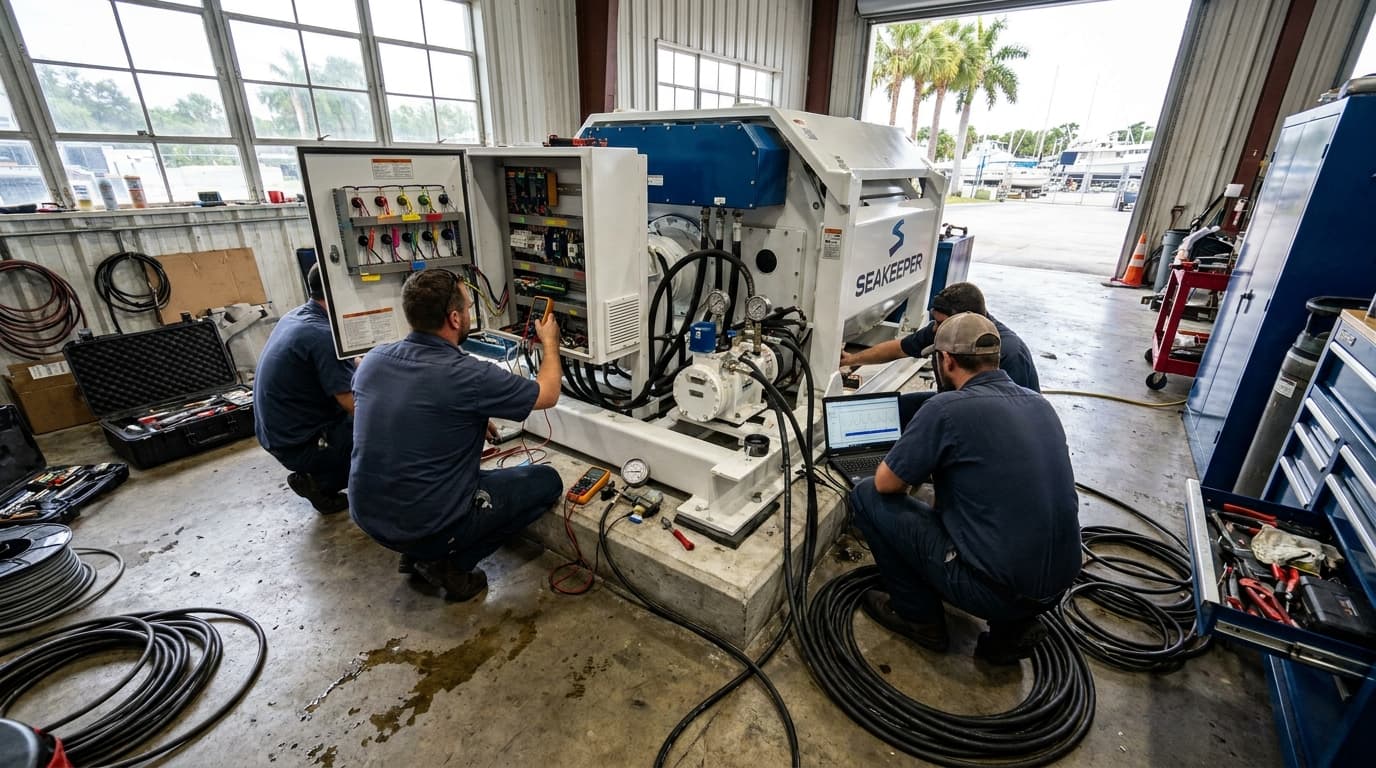
The answer in sanctuary waters
Read the exception before you pump. 15 CFR 922.163(a)(4), accessed 8 October 2026, prohibits discharging or depositing material inside the sanctuary, then allows three narrow cases from inside the boundary: fishing bait used while fishing, water from routine operations such as deck wash and graywater excluding oily wastes from bilge pumping, and cooling water or engine exhaust. A stabilizer cooler that discharges clean seawater is arguing the cooling-water line. A fin seal that has oiled the bilge is arguing a line the rule already struck.
- Clean cooling water and oily bilge water are not the same discharge.
- In-water scrubbing that deposits fin coating is a deposit, not “maintenance.”
- 40 CFR part 139 is not a reason to ignore the sanctuary rule today.
The rule on the fins
The same paragraph prohibits the deposit of material, not only a pumped bilge. Paint and biological scrapings from an active fin are material. Haul-out with capture is the path that does not ask the exception to cover a deposit. Florida’s organotin statute is separate and statewide, and it still matters when the fin is coated: § 487.171 classifies antifouling paint containing organotin at an acceptable release rate as a restricted-use pesticide, limits sale and use to licensed dealers and applicators, and limits application to vessels longer than 25 meters or vessels with aluminum hulls. A 12-meter charter cat is not the 25-meter case. Do not add tin to “help the fin.”
40 CFR 139.1 is the reason a niche-area coating memo is not your current permit. The part excludes recreational vessels and, except for ballast water, small vessels and fishing vessels. Paragraph (d) holds the standards until Coast Guard rules on marine pollution control devices are final, effective, and enforceable. Section 139.22 is real text about hulls and niche areas. It is not, by the coverage section’s own terms, the rule that replaces 922.163 on a charter boat this season.

If you skip it
Pump the oily bilge because the boat has to make a sunset charter, and the conduct is the prohibited discharge the exception refused. Scrub the fin alongside a reef because the schedule slipped, and the chips are a deposit. The sanctuary regulation does not print a stabilizer diagnostic fee, and this page will not invent a civil-penalty dollar. The National Marine Sanctuaries Act is the penalty statute; quote a current inflation-adjusted figure only from NOAA’s latest schedule, not from memory. The operational consequence you can see without that schedule is the trip: the boat is alongside, the bilge is closed, and the charter waits.
Who signs, who pays, how long
| Question | Document |
|---|---|
| Who must not discharge | Any person, under 15 CFR 922.163(a). The operator owns the pump switch |
| Who may apply organotin paint | A licensed applicator, and only on the vessels § 487.171 allows |
| Which Coast Guard office | Sector Key West for the zone in 33 CFR 3.35-40, if the boat is certificated |
| Published diagnostic fee | None in these sections. Verify. Do not invent one |
How the next zone differs
| Waters | Rule you can cite | What swaps out |
|---|---|---|
| Monroe, inside the sanctuary | 15 CFR 922.163(a)(4) | Oily bilge excluded; cooling water allowed; deposits banned |
| Miami River yard | County marine operating permit | Bilge-cleaner ban and a sheen standard at the facility |
| Broward yard | County BMP | Contained used oil and a 10-gallon report, on land at the yard |
Sector boundaries are in 33 CFR 3.35-40 for Key West. A boat at Key West is not in Sector Jacksonville’s zone, which ends at 28°N on the Atlantic side.
Checklist for this query
- Decide if the water about to leave the boat is clean cooling water or oily bilge.
- Do not pump the oily case inside the sanctuary.
- Do not scrub fin coating into the water. Capture it on the hard.
- If the coating is organotin, stop unless § 487.171’s vessel and license limits are met.
- Do not treat 40 CFR 139.22 as if 139.1(d) had already started the clock.
Fee or timeline the document prints
Sections 922.163 and 487.171 do not print a fee or a turnaround time for stabilizer diagnosis. They print prohibitions and, for organotin paint, a vessel-length gate at 25 meters plus an aluminum-hull alternative. The timeline is operational: the discharge decision is immediate, before the pump runs. Anything about a yard day-rate is outside these documents.
Questions from the wheelhouse
Can I pump the bilge after a fin seal lets go in the Keys?
Not if the bilge is oily. 15 CFR 922.163(a)(4) allows routine vessel water and then excludes oily wastes from bilge pumping. Clean cooler seawater can sit in the cooling-water exception. Oily water from a seal cannot.
Does scrubbing a stabilizer fin in the water violate the sanctuary?
In-water scrubbing that puts coating in the water is a deposit under the same paragraph. Haul the fin and capture the waste. Florida Statutes § 487.171 separately restricts organotin paint to licensed applicators and to vessels longer than 25 meters or with aluminum hulls.
Is the new federal niche-area coating rule already the duty here?
40 CFR 139.1 says the coating standards take effect only when Coast Guard device rules are final and enforceable, and it excludes recreational vessels. Do not skip 15 CFR 922.163 because a later federal rule is still pending.
Does a charter cat in Marathon use the Broward yard BMP?
Only if the boat is in a Broward yard. The sanctuary rule follows the boat in Monroe County waters. A contained sanding tent in Fort Lauderdale is the county BMP. Scraping a fin over the side in Marathon is the sanctuary deposit ban. They are not substitutes.
Where to read next
Sources
- NOAA. “15 CFR 922.163 — Prohibited activities, sanctuary-wide.” Accessed 8 October 2026. law.cornell.edu.
- Florida Legislature. “§ 487.171, organotin antifouling paint.” Accessed 8 October 2026. flsenate.gov.
- U.S. EPA. “40 CFR 139.1 — Coverage,” including the effective-date paragraph. Accessed 8 October 2026. law.cornell.edu.
- U.S. Coast Guard. “33 CFR 3.35-40 — Sector Key West.” Accessed 8 October 2026. ecfr.gov.